
Great Pyramid of Giza
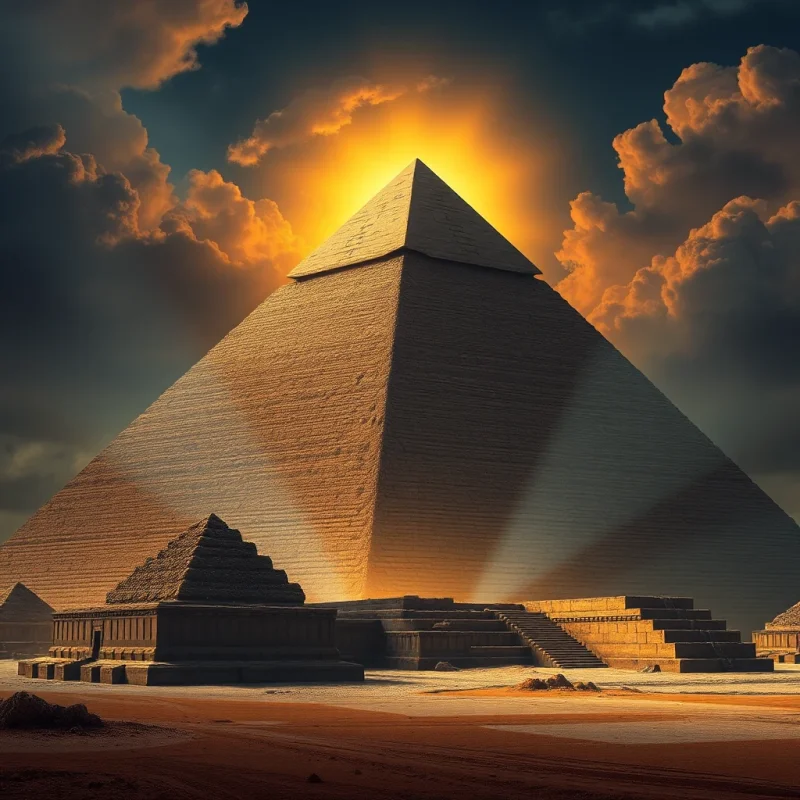
The Great Pyramid of Giza stands as the largest of the three pyramids on the Giza Plateau, attributed in mainstream Egyptology to Pharaoh Khufu of the Fourth Dynasty (c. 2580 to 2560 BCE). The pyramid was originally encased in polished Tura limestone and stood approximately 146.6 meters tall.
Related Subjects
Khufu
Khufu succeeded his father, Sneferu, and ruled Egypt in the 26th century BCE. His reign is characterized by significant architectural achievements, including the construction of the Great Pyramid. Des...
Diary of Merer
The Diary of Merer is a papyrus logbook found at Wadi al-Jarf in 2013 recording the transport of limestone from Tura to Giza during the reign of Khufu, the oldest inscribed papyrus known from Egypt.
Ancient Egypt
Dynastic civilization along the Nile from early unification through the Ptolemaic period.
Ankh Symbol
The Ankh symbol, an ancient Egyptian hieroglyph representing eternal life, is a cross with a loop at the top. This iconic symbol spans across all Egyptian periods, embodying a profound cultural and re...
Saqqara
Saqqara is the vast necropolis of ancient Memphis, home to the Step Pyramid of Djoser and tombs spanning from the Early Dynastic Period to the Ptolemaic and Roman eras.
Great Sphinx of Giza
The Great Sphinx of Giza is a limestone statue of a reclining lion with a human head on the Giza Plateau, conventionally dated to the reign of Khafre (c. 2558-2532 BCE) and the subject of a long-runni...
Herodotus
Herodotus, often called 'The Father of History,' was born in Halicarnassus, ancient Caria (modern-day Bodrum, Turkey). He came from a prominent family and received a good education, which enabled his...
Egypt
Ancient Egypt was a civilization of ancient Northeastern Africa, concentrated along the lower reaches of the Nile River in what is now the modern country of Egypt. This civilization emerged around 310...
Recent Discussion
No Comments Yet
Be the first to share your thoughts on this topic.