
Herodotus
Herodotus, often called 'The Father of History,' was born in Halicarnassus, ancient Caria (modern-day Bodrum, Turkey). He came from a prominent family and received a good education, which enabled his later work. Forced to flee his hometown due to political tensions, he spent much of his life traveling extensively throughout the Mediterranean world, Egypt, and the Near East. His masterwork, 'The Histories,' represents the first systematic attempt to chronicle and explain historical events, specifically focusing on the Greco-Persian Wars. Unlike previous chroniclers, Herodotus attempted to verify facts and provide rational explanations for events, though he also included local legends and personal observations. His methodology of gathering eyewitness accounts, documenting varying versions of events, and attempting to separate fact from myth established many of the fundamental principles of historical research. He spent his later years in Athens and eventually settled in Thurii, a Greek colony in southern Italy, where he likely completed his historical work and died.
Articles

Related Subjects
Khufu
Khufu succeeded his father, Sneferu, and ruled Egypt in the 26th century BCE. His reign is characterized by significant architectural achievements, including the construction of the Great Pyramid. Des...
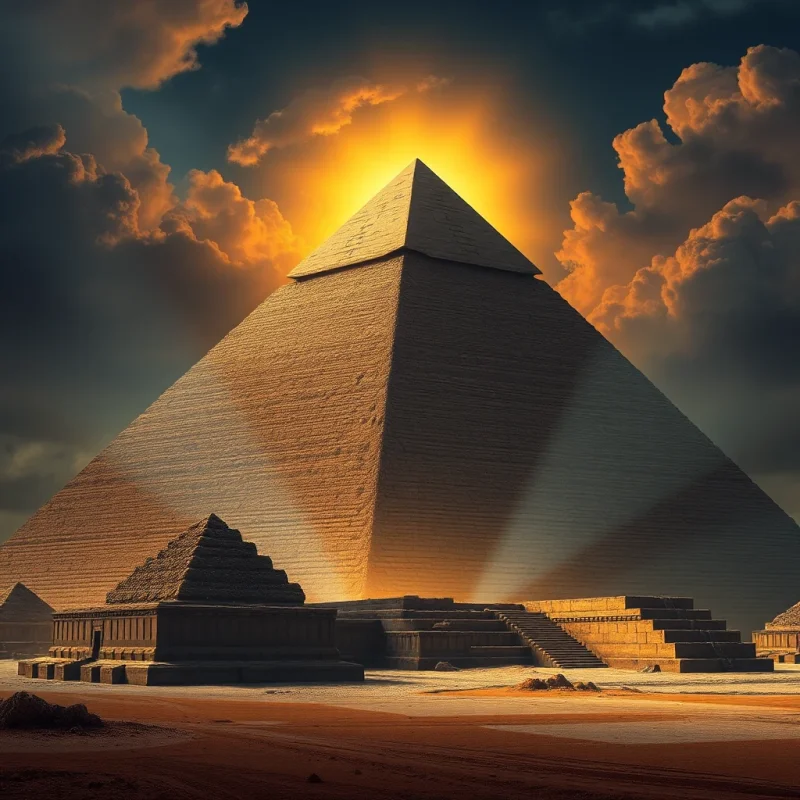
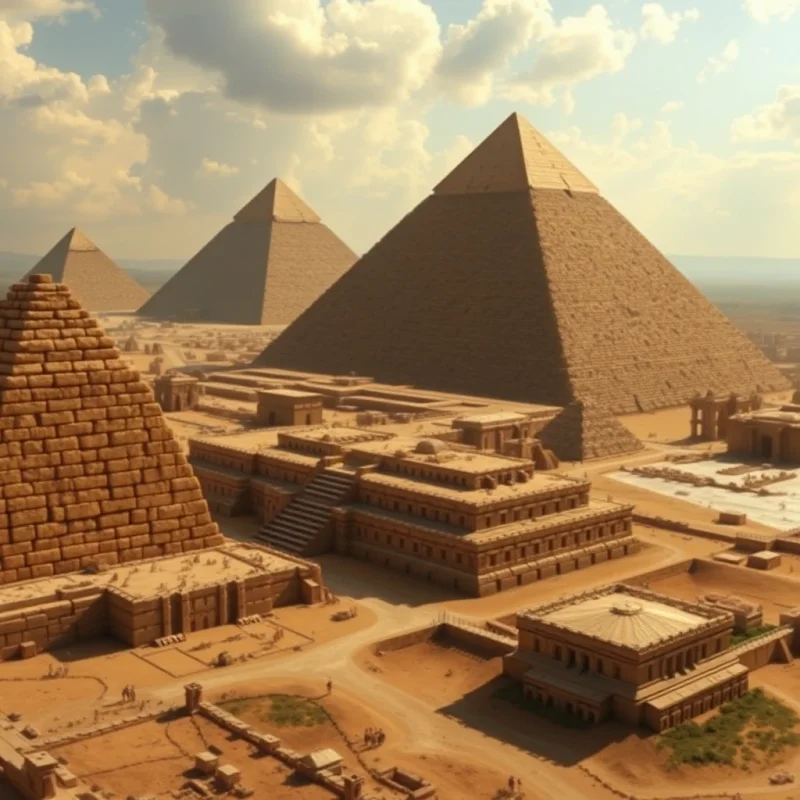
Great Pyramid of Giza
The Great Pyramid of Giza, an emblem of ancient Egypt, stands as the oldest and largest pyramid within the Giza pyramid complex. Constructed during the Old Kingdom era, it is a testament to the advanc...
Diary of Merer
The Diary of Merer is a papyrus logbook found at Wadi al-Jarf in 2013 recording the transport of limestone from Tura to Giza during the reign of Khufu, the oldest inscribed papyrus known from Egypt.
Ancient Egypt
Dynastic civilization along the Nile from early unification through the Ptolemaic period.
Ankh Symbol
The Ankh symbol, an ancient Egyptian hieroglyph representing eternal life, is a cross with a loop at the top. This iconic symbol spans across all Egyptian periods, embodying a profound cultural and re...
Leonidas I
Leonidas I was a king of Sparta from the Agiad dynasty, who became one of history's most famous military commanders. Born around 540 BCE, he was not initially heir to the throne but became king follow...
Xerxes I
Xerxes I, also known as Xerxes the Great, was the fifth king of the Achaemenid Empire, ruling from -486 to -465 BCE. Born to King Darius I and Queen Atossa, daughter of Cyrus the Great, Xerxes inherit...
Ephialtes
Ephialtes was an ancient Athenian statesman and democratic reformer who played a crucial role in transforming Athens into a radical democracy. Born into a middle-class family, he emerged as a leader o...
Other Sources
Mark Lehner — Archaeology of an Image: The Great Sphinx of Giza (1991)
Mark Lehner · Book
Mark Lehner — Archaeology of an Image: The Great Sphinx of Giza (1991)
Colin Reader — A Geomorphological Study of the Giza Necropolis (1997)
Colin Reader · Journal article
Colin Reader — A Geomorphological Study of the Giza Necropolis (1997)
Christiane Zivie-Coche — Sphinx: History of a Monument (1997 EN; 1976 FR)
Christiane Zivie-Coche · Website
Christiane Zivie-Coche — Sphinx: History of a Monument (1997 EN; 1976 FR)
Recent Discussion
No Comments Yet
Be the first to share your thoughts on this topic.