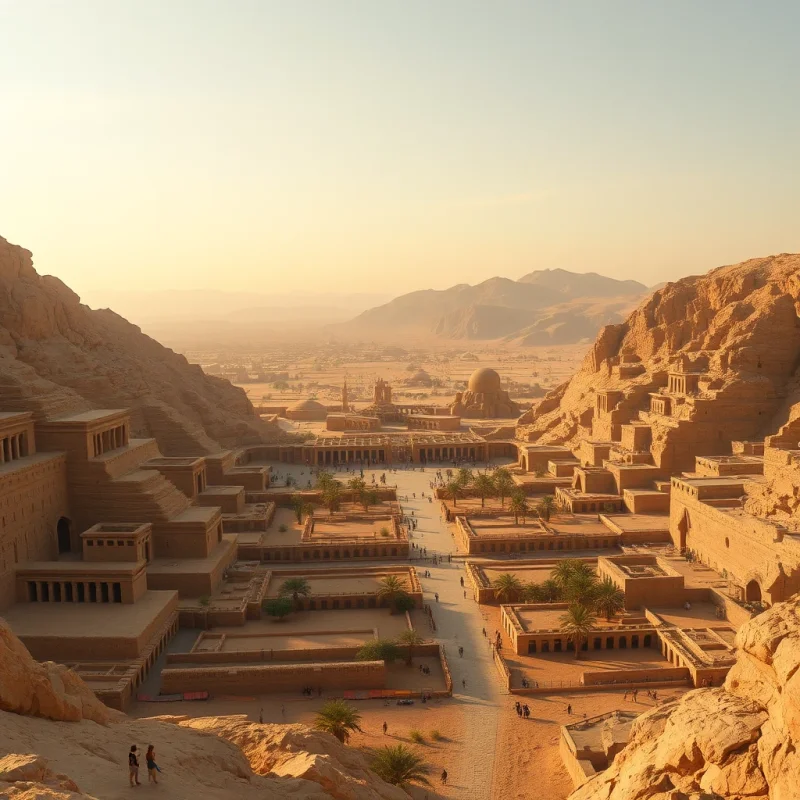
Valley of the Kings
The Valley of the Kings, known to ancient Egyptians as 'The Great and Majestic Necropolis', served as the royal burial ground for pharaohs and powerful nobles of the New Kingdom (1550-1077 BCE). Located on the west bank of the Nile near Luxor, the valley contains 63 discovered tombs, ranging from simple pits to complex tombs with over 120 chambers. The most famous discovery was Tutankhamun's intact tomb (KV62) in 1922. The valley's geology - limestone ideal for carving - and its hidden location made it perfect for protecting royal mummies and their treasures. Recent radar scans suggest more undiscovered tombs may still lie hidden.
Related Subjects
Ramesses II
Ramesses II, also known as Ramesses the Great, was one of ancient Egypt's most powerful and celebrated pharaohs. Born to Pharaoh Seti I and Queen Tuya, he ascended to the throne in his early 20s and r...
Tutankhamun
Tutankhamun, often called 'King Tut,' was an ancient Egyptian pharaoh who ruled during the New Kingdom period. Born around 1342 BCE, he became king at approximately age 9, taking the throne from his f...
Colossi of Memnon
The Colossi of Memnon are two seated quartzite statues of Amenhotep III on the west bank of the Nile at Thebes, once the entrance to his mortuary temple and famous in antiquity for the 'singing' sound...
Mask of Tutankhamun
The Mask of Tutankhamun is one of the most iconic symbols of ancient Egyptian art and craftsmanship. It is a solid gold death mask that covered the head and shoulders of King Tutankhamun's mummy. The...
Book of the Dead
The Book of the Dead is not a single book but a collection of ancient Egyptian funerary texts consisting of spells and instructions to help guide the deceased through the afterlife. These texts were t...
Recent Discussion
No Comments Yet
Be the first to share your thoughts on this topic.